Beltroni AI Agents for Longevity Peptide Discovery: Target ID to Binding and Validation
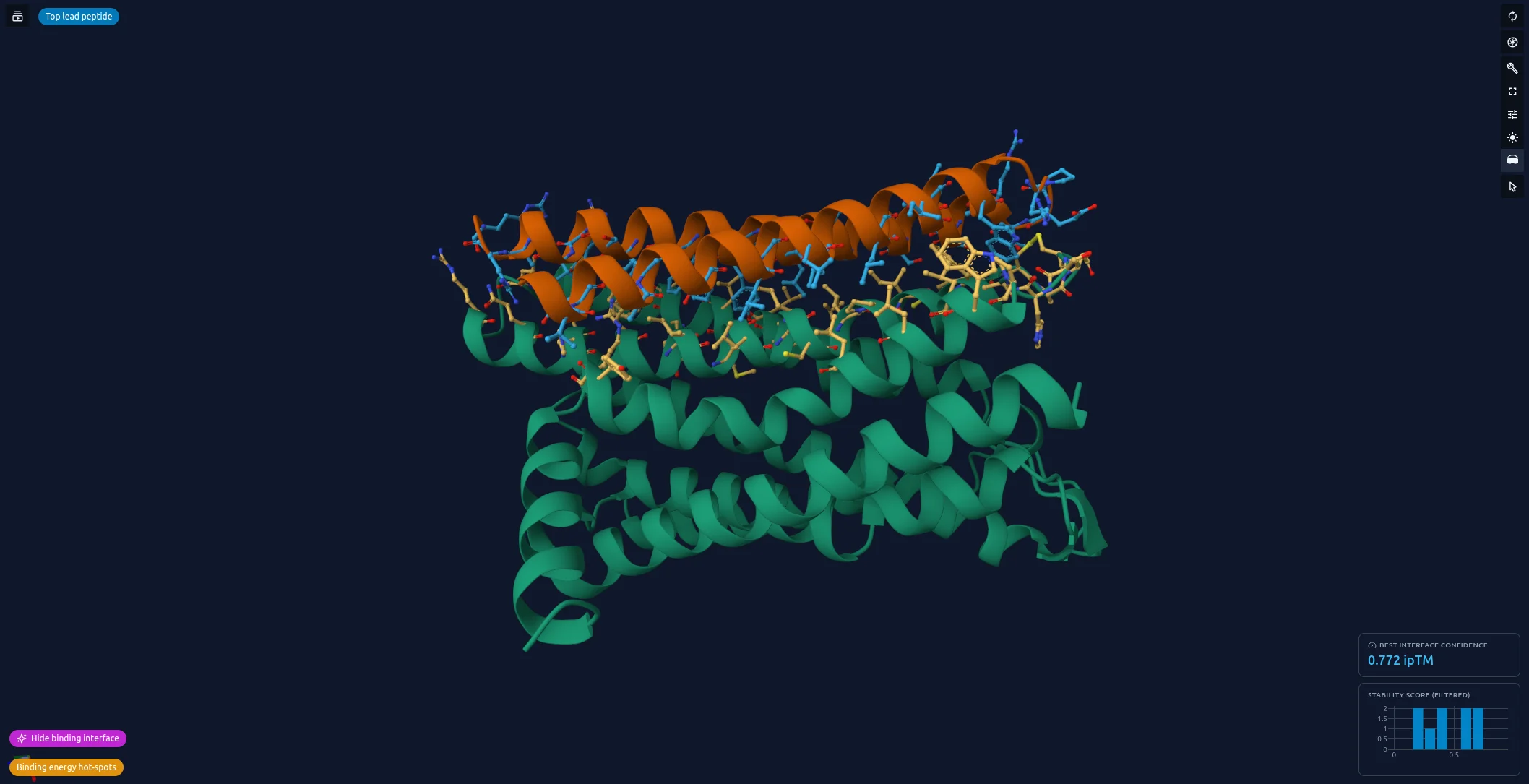
In the rapidly evolving frontier of health science, peptide design has stood as a complex, time-intensive bottleneck. Today, we are proud to introduce Nikola, our most advanced Research AI Agent, custom-engineered to accelerate longevity peptide design and breakthrough health discovery.
🔒 Nikola is available exclusively through partnership. Sign up below to begin the process, and our team will reach out to discuss access.
Longevity Research AI Agents — Nikola
Are you a US-based longevity health science group looking to revolutionize peptide design? Connect with our team to apply for early access to the Nikola advanced research system.
Sign Up to BeginHarnessing advanced generative models to design active peptide sequences targeting key cellular longevity pathways.
Each design cycle — from target identification through ADMET validation — completes in under 20 minutes, generating 9 validated peptide candidates. Full campaigns run continuously and autonomously, typically overnight to several days depending on design-space depth.
Transforming Cellular Health Science
Peptides serve as vital signaling molecules, coordinating biological processes ranging from cellular regeneration to immune modulation. Traditional design has long relied on iterative, trial-and-error discovery cycles. Nikola complements this work by adding a layer of predictive optimization ahead of physical experimentation. By analyzing millions of molecular structures, Nikola maps peptide behaviors and surfaces and ranks promising therapeutic pathways for researcher review.
The Molecular Hallmarks of Aging: Targeted Interventions
The modern longevity research field has, over roughly the last fifteen years, converged on a shared framework often called the hallmarks of aging: a relatively short list of distinct, interconnected failure modes that collectively produce what we experience as aging. Under this framework, each hallmark is a category of biological degradation, and each has an active research program devoted to developing therapeutic counter-measures.
Epigenetic Alterations
As cells age, they undergo progressive alterations in chromatin structure, including global DNA hypomethylation, promoter-specific hypermethylation, and histone modification shifts. These changes disrupt key gene expression programs—silencing protective longevity pathways while leaving inflammatory pathways open. The research objective is epigenetic reprogramming: guiding DNA methylation patterns back toward more youthful configurations.
Cellular Senescence
Senescence represents a state of permanent cell cycle arrest triggered by cumulative genomic stress, telomere attrition, or oncogenic activation. Senescent cells remain metabolically active, secreting a noxious cocktail of pro-inflammatory cytokines, chemokines, and matrix metalloproteinases known as the Senescence-Associated Secretory Phenotype (SASP). SASP spreads senescence to adjacent healthy tissue and drives systemic chronic inflammation ("inflammaging"). The therapeutic mission is senolytics: targeted peptides designed to selectively trigger apoptosis in senescent cells without harming healthy surrounding tissue.
Mitochondrial Dysfunction
Mitochondrial efficiency declines sharply with age, marked by reduced integrity of the electron transport chain, decreased ATP production, and an accumulation of somatic mitochondrial DNA (mtDNA) mutations. This metabolic decline leads to elevated reactive oxygen species (ROS) production, causing oxidative damage to cellular organelles and triggering chronic intracellular stress. Advanced peptide discovery focuses on mitochondria-targeted peptides (such as SS-31 analogues or cardiolipin stabilizers) that restore membrane potential, reduce ROS emissions, and upregulate PGC-1α to stimulate mitochondrial biogenesis.
Loss of Proteostasis
Proteostasis involves the coordinated network of ribosomes, chaperones (such as heat shock proteins), and degradation systems (autophagy-lysosome and ubiquitin-proteasome pathways) that ensure correct protein synthesis, folding, and clearance. In aging cells, this quality-control machinery decays, resulting in the intracellular accumulation of harmful misfolded proteins and aggregates. Longevity research employs custom-engineered signaling peptides that activate chaperones or stimulate autophagy to restore cellular clearance mechanisms and prevent aggregate-induced damage.
Peptide Engineering: A Precision Platform for Longevity Therapeutics
What makes the hallmarks framework so valuable to the scientific community is that it converts a complex, monolithic process—aging—into a list of independently addressable molecular subsystems. Instead of attempting a generalized cure-all, research teams break the problem down to model, test, and target specific cellular pathways, developing therapies focused on one defect at a time.
Peptide therapeutics represent a compelling modality for targeting these hallmarks. Due to their high specificity, high off-target selectivity, and ability to mimic natural signaling ligands, engineered peptides can traverse cell membranes, stabilize proteins, and modulate receptor sites with high precision. Through advanced computational screening, platforms like Nikola help accelerate the discovery of these active molecules, meaningfully compressing early-stage translation timelines.
Discovering target receptors and tissue-specific biomarkers for targeted peptide intervention.
AI-driven de novo design, generating sequence libraries optimized for target affinity and specificity.
Predicting peptide tertiary structures and thermodynamic stability to select optimal synthesis candidates.
Optimizing interactions between designed peptides and target proteins for maximal binding affinity.
In silico ADMET profiling of absorption, safety, and metabolic stability to prioritize lead candidates.
How we compare
| Platform | Speed | Pipeline coverage | Deployment |
|---|---|---|---|
| LigandForge (LigandAI) | >1,000 sequences/sec | Sequence generation only — structure validation is a separate step | Cloud-hosted |
| BindCraft | 5–7 min per candidate | Generation + AF2 filtering | Cloud-hosted |
| Beltroni AI Bio-Server | ~20 min / 9 candidates | Full Pipeline | On-premise |
Speed figures for LigandForge and BindCraft are sourced from published benchmarks (bioRxiv 2026.03.14.711748; BindEnergyCraft arxiv 2505.21241). Beltroni figures reflect production hardware. Pipeline coverage comparisons reflect each platform's core inference step.
The Beltroni AI Bio-Server delivers 9 fully validated peptide candidates — through the full pipeline — in under 20 minutes, on latest hardware at a fraction of cloud cost. No sequence data leaves our facility.
Infrastructure: Beltroni AI Bio-Server
These dedicated hardware servers run the computational discovery pipelines on Beltroni premises, enabling real-time structural folding simulations and molecular affinity screening without transmitting sequence data outside our private network security perimeter. This model ensures maximum intellectual property protection, dedicated compute with no cloud round-trip latency, and dedicated AI accelerator compute power for continuous, high-throughput longevity research.
AI System Guardrails & Infrastructure Security
In high-stakes research, an AI agent is only as valuable as it is trustworthy. We treat guardrails and infrastructure security not as features bolted on at the end, but as the foundation Nikola is built upon: proprietary data stays inside the organization\'s own network, outputs are constrained to scientifically valid space, and every inference is auditable end to end.
These guardrails are already in production, and they are continuously evolving. This is especially true at the target-selection stage—the most consequential decision point in the pipeline—where the safeguards governing which targets an agent may pursue remain an area of active refinement with our vetted research partners.
Constrained Generation
Outputs are bounded to scientifically valid space, with validation gates that reject unstable, non-viable, or off-target candidates before they ever reach a researcher—preventing hallucinated results from contaminating the discovery pipeline.
Data Sovereignty & Isolation
Proprietary sequences and model weights never leave the private security perimeter. Running on Beltroni premises removes third-party cloud exposure entirely, protecting intellectual property and satisfying the strictest compliance and IP-security requirements.
Auditability & Access Control
Every inference is logged immutably, and every capability is gated by role-based access. Autonomous actions carry scope and rate limits, so the agent operates within clearly defined boundaries—producing reproducible, defensible records for regulatory review.
🔒 Nikola is available exclusively through partnership. Sign up below to begin the process, and our team will reach out to discuss access.
Longevity Research AI Agents — Nikola
Are you a US-based longevity health science group looking to revolutionize peptide design? Connect with our team to apply for early access to the Nikola advanced research system.
Sign Up to BeginRefactoring Longevity — A Book by Beltroni AI's Founder
While the primary audience is software engineers navigating a career pivot, the translation layer holds up for a wider circle of readers too. Others who will get real value out of this book include:
- Business managers, leaders, and investors seeking a technical edge in longevity
- Engineering managers and technical leads scoping out where their team's skills could transfer next
- Any professional with a programming background who's genuinely curious about lifespan and longevity science
- Product managers and technical founders considering a move into biotech or health tech
- Self-taught builders and lifelong learners drawn to emerging, high-impact fields
Through this comparative lens, you will discover how AI-driven drug discovery tools are used like modern IDEs to write custom de novo peptide scripts — small molecular request payloads designed to hit specific public cellular endpoints (like the Adenosine A2A receptor) to trigger backend cleanup tasks. You will learn how biological Time-To-Live (TTL) prevents systemic network congestion, how autophagy acts as a native garbage collector, and how pioneers are building genetic “on/off switches” to run live disk-cleanup operations on human DNA.
Further Reading
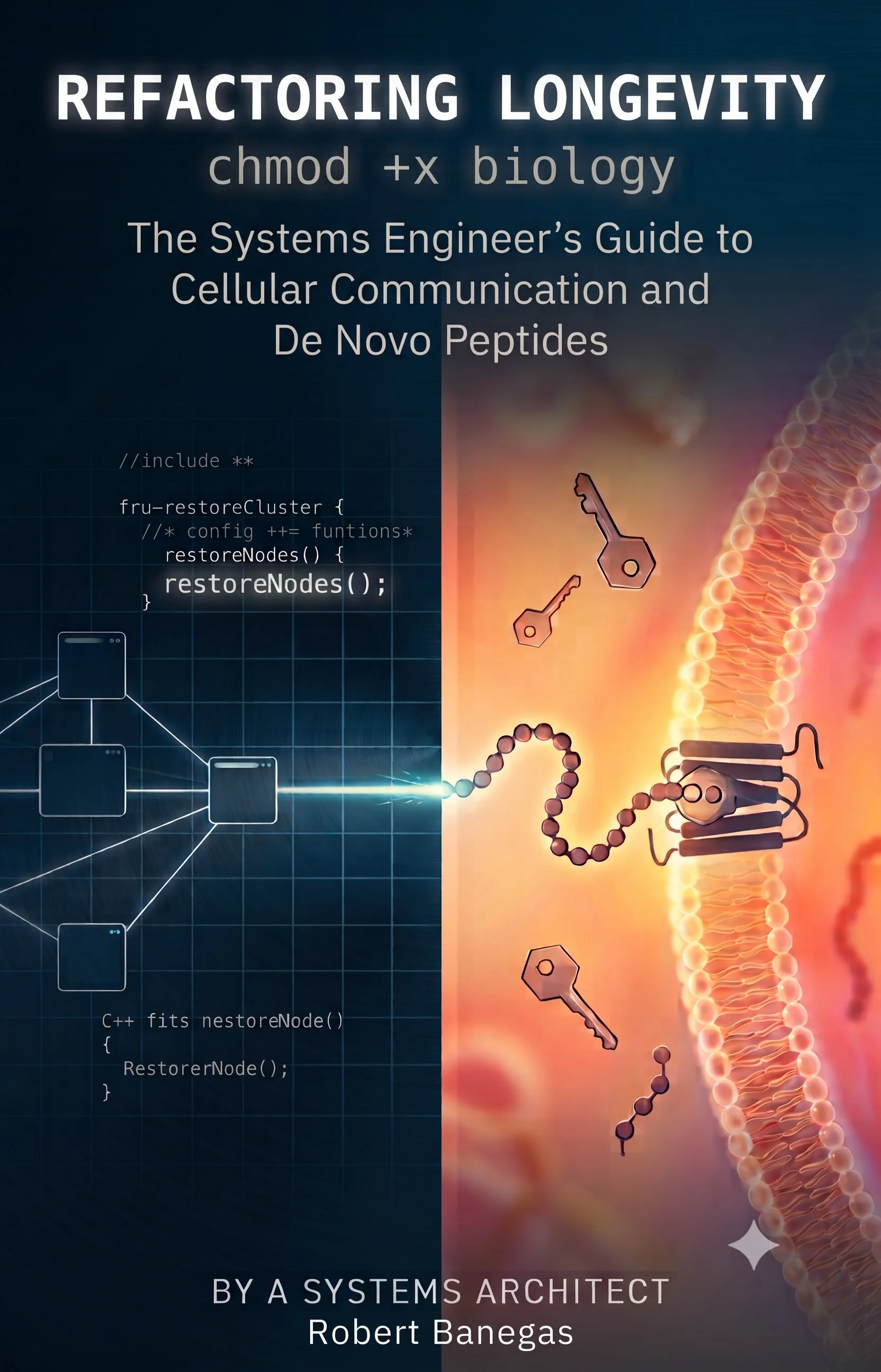
Refactoring Longevity — chmod +x Biology
The Systems Engineer's Guide to Cellular Communication and De Novo Peptides. An educational, vendor-neutral introduction to the systems-engineering way of thinking about biological longevity.
Read on Amazon →Currently available in the United States, Canada, Australia and United Kingdom, with more regions coming soon.